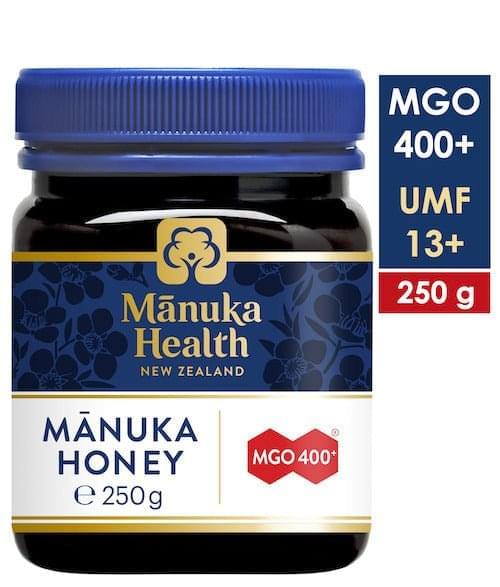
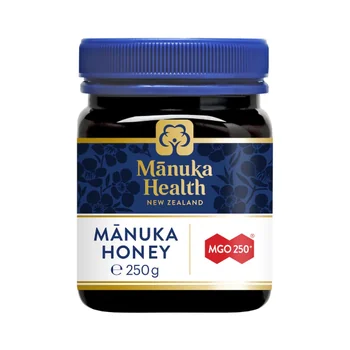
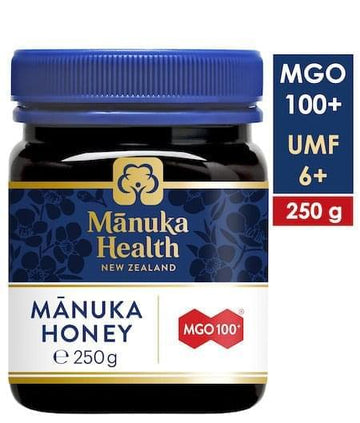
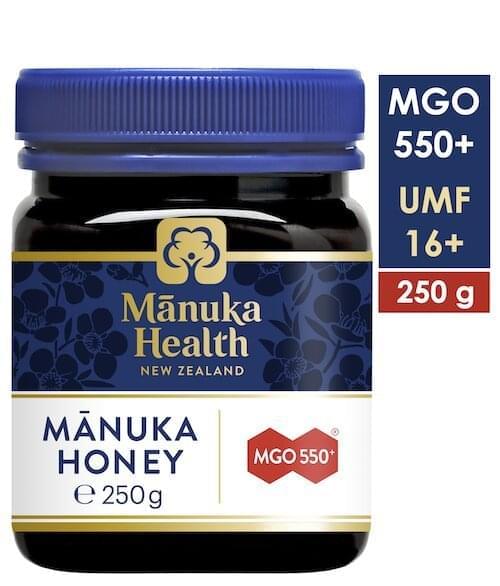
Manuka Honey MGO 400+
342 reviews
Premium Manuka honey from New Zealand, UMF 13+ certified. Ideal for digestive treatments, wound healing and boosting immunity. Manuka Health, 250g.
View details & priceLooking for the best manuka honey? This complete guide covers everything you need to know — from proven manuka honey benefits and antibacterial properties to MGO ratings and how to choose the right product.
Whether you want to boost immunity, support digestion or improve your skin, discover why the best manuka from New Zealand is one of nature's most powerful superfoods.*
View Recommended ProductsManuka honey is a type of monofloral honey originating from New Zealand, produced by bees that pollinate the Leptospermum scoparium (manuka bush).
It differs from regular honey through its high content of methylglyoxal (MGO), a natural compound with scientifically proven antibacterial properties.
The higher the MGO level, the greater the therapeutic potential of the Manuka honey.
Unlike regular honey, Manuka honey contains high concentrations of methylglyoxal (MGO), a compound with powerful antibacterial properties. The higher the MGO level, the stronger the therapeutic properties of the honey.
Manuka honey is the only type of honey in the world that contains significant levels of MGO, making it unique in the natural treatment of various conditions. Scientific research has confirmed its effectiveness in combating antibiotic-resistant bacteria, includingStaphylococcus aureus (MRSA).
UMF (Unique Manuka Factor) is a grading system developed in New Zealand that evaluates the purity and quality of Manuka honey. It involves testing four chemical markers: MGO, leptosperin, dihydroxyacetone (DHA) and HMF.
MGO (Methylglyoxal) is the active compound responsible for the antibacterial properties of Manuka honey. It is measured in mg/kg. For example, MGO 400+ means at least 400 mg of methylglyoxal per kilogram of honey.
Manuka honey fundamentally differs from regular honey and propolis in its chemical composition, mechanism of action and therapeutic uses.
Manuka honey differs from regular honey through the presence of methylglyoxal (MGO), a stable antibacterial compound that does not degrade during processing or storage. Regular honey contains only hydrogen peroxide, which is rapidly lost on contact with the body's enzymes. This is why Manuka honey has superior therapeutic properties, confirmed by scientific research.
| Criterion | Manuka Honey | Regular Honey |
|---|---|---|
| Main active compound | Methylglyoxal (MGO) | Hydrogen peroxide |
| Antibacterial effect | Strong, stable, non-peroxide | Weak, lost during processing |
| Origin | Exclusively New Zealand | Various regions worldwide |
| Certification | UMF™, MGO laboratory tested | No specific certification |
| Texture | Creamy, dense, slightly granulated | Liquid or crystallised |
| Taste | Intense, slightly bitter, earthy | Sweet, floral |
| Price (250g) | 89 – 629 lei | 15 – 40 lei |
| Therapeutic uses | Wounds, gastritis, infections, skin | Sweetener, mild cough |
Manuka honey and propolis are different bee products with complementary mechanisms of action. Manuka honey excels in wound healing and digestive treatments thanks to MGO, whilst propolis is more effective in combating viruses and boosting immunity through flavonoids. The two can be used together for a synergistic effect.
| Criterion | Manuka Honey | Propolis |
|---|---|---|
| Form | Honey (liquid/creamy) | Resin (tincture, capsules, spray) |
| Origin | Nectar from manuka flowers | Tree resins collected by bees |
| Active compounds | MGO, leptosperin, DHA | Flavonoids, phenolic acids, CAPE |
| Primary action | Antibacterial, wound healing | Antiviral, anti-inflammatory |
| Administration | Orally or topically | Tincture, spray, capsules |
| Most effective for | Gastritis, wounds, acne, sore throat | Colds, immunity, viral infections |
| Taste | Sweet-bitter, pleasant | Bitter, astringent |
Discover all the benefits of Manuka honey → · See the MGO guide to choose the right product →
We have selected the best Manuka honey products available in Romania based on strict criteria: authentic UMF™ certification, confirmed New Zealand origin, value for money and positive user reviews. Not sure which MGO to choose? See the MGO guide. View all partner stores →

342 reviews
Premium Manuka honey from New Zealand, UMF 13+ certified. Ideal for digestive treatments, wound healing and boosting immunity. Manuka Health, 250g.
View details & price
518 reviews
UMF 10+ Manuka honey perfect for daily use, sore throats, colds and skin care. Excellent value for money. Manuka Health, 250g.
View details & price
187 reviews
Highest quality Manuka honey, UMF 15+. Recommended for bacterial infections, intensive treatments and chronic conditions. Manuka Health, 250g.
View details & price
124 reviews
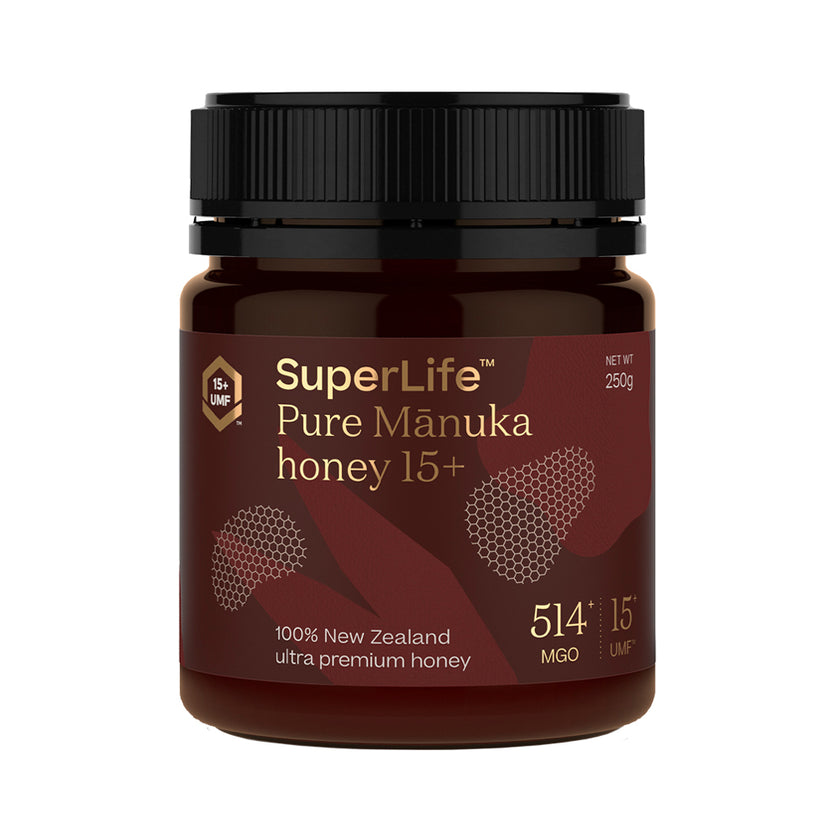
SuperLife certified UMF 15+ Manuka honey, with MGO 514. Suitable for intensive treatments, immunity and therapeutic use. 250g.
View details & price
231 reviews
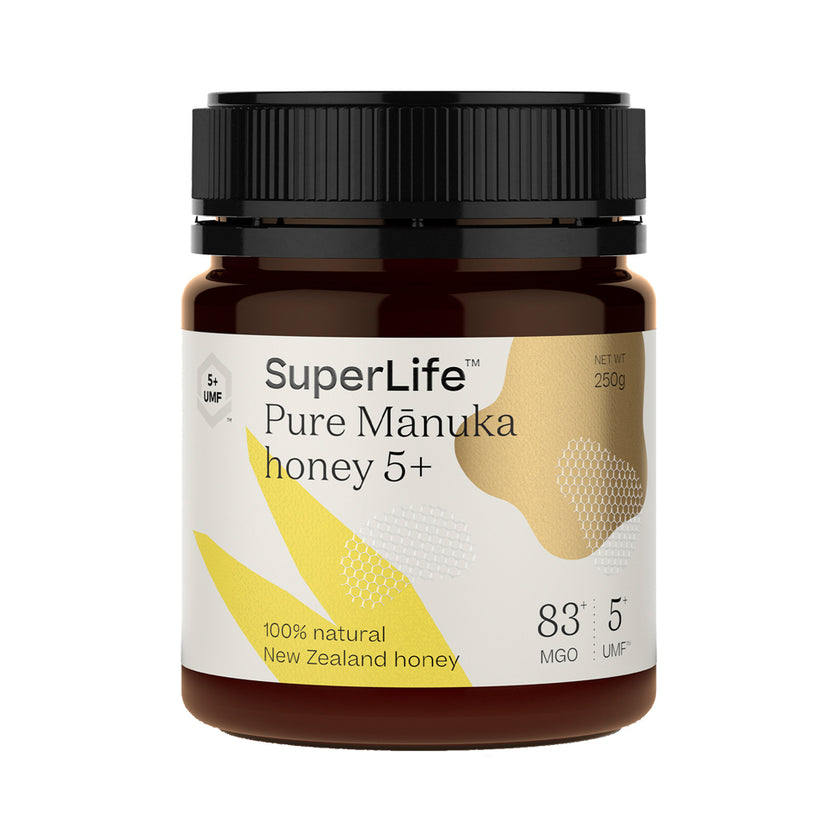
SuperLife certified UMF 5+ Manuka honey, with MGO 83. Ideal for daily use, prevention and boosting immunity. 250g.
View details & price
156 reviews
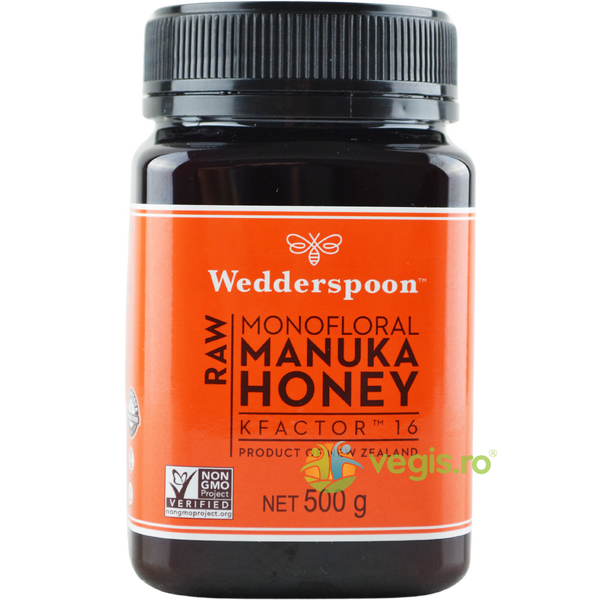
Wedderspoon KFactor 16 Manuka honey, RAW, 100% natural. Not heat-treated, retaining all active nutrients. 500g.
View details & priceManuka honey also makes a wonderful gift for loved ones. A Manuka honey gift set is an elegant and practical gesture, perfect for holidays, birthdays or any special occasion.
Manuka honey is recognised worldwide for its unique therapeutic properties, confirmed by scientific research. Choose the right honey from our recommended products.
Manuka honey contains methylglyoxal (MGO) which destroys antibiotic-resistant bacteria, including MRSA and E. coli.
Clinical studies have demonstrated its effectiveness against over 80 bacterial species.
Regular consumption of Manuka honey stimulates the production of cytokines, proteins essential for the immune response.
It contains powerful antioxidants (flavonoids and phenolic acids) that protect cells from oxidative stress.
Seasonal preventive consumption is recommended – one teaspoon of Manuka honey MGO 250+ in the morning, especially during the cold season (October – March), to reduce the risk of colds and respiratory infections.
Studies show that the antioxidants in Manuka honey neutralise free radicals and support the production of immune cells (T and B lymphocytes).
Manuka honey accelerates cell regeneration, reduces inflammation and deeply moisturises the skin.
It is used in the treatment of acne, eczema, psoriasis and in natural anti-ageing routines.
Manuka honey is an exceptional natural ingredient for skincare, used both in professional cosmetics and in home skincare routines.
As a face mask, Manuka honey is applied to clean skin in a thin layer, left for 15–20 minutes, then rinsed with lukewarm water. Regular application (2–3 times per week) visibly reduces inflammation, cleanses pores and evens out the skin tone.
The anti-ageing properties of Manuka honey are due to antioxidants that combat free radicals – the main culprits behind premature skin ageing. MGO stimulates collagen production, reducing fine lines and wrinkles.
For acne, Manuka honey combats the bacterium Propionibacterium acnes without drying the skin, maintaining the moisture balance. It is also effective for post-acne scarring, stimulating tissue regeneration.
For eczema and dermatitis, topical application reduces itching, flaking and redness, offering a natural alternative to cortisone creams.
Reduces inflammation both internally (digestive tract, joints) and externally (skin, mucous membranes).
The anti-inflammatory effect is directly proportional to the MGO level – the higher it is, the stronger the effect.
Manuka honey protects the gastric mucosa, helps treat gastritis and acid reflux.
Studies show its effectiveness against the bacterium Helicobacter pylori, the main cause of gastric ulcers.
Although it may seem counterintuitive for a sweet substance, Manuka honey reduces bacterial plaque, combats gingivitis and prevents cavities.
MGO targets the bacteria responsible for dental problems.
Choosing the correct MGO level is essential. Here is a comparison table to help you understand which level of Manuka honey you need for each use.
| MGO | UMF | Strength | Recommended Uses | Price |
|---|---|---|---|---|
| MGO 30+ | UMF 5+ | Basic | Daily consumption, natural sweetener, cooking | ~49 lei |
| MGO 100+ | UMF 6+ | Moderate | Immunity maintenance, mild cough, energy | ~89 lei |
| MGO 250+ | UMF 10+ | High | Sore throat, acne, colds, skin care | ~125 lei |
| MGO 400+ | UMF 13+ | Very High | Gastritis, reflux, wounds, gingivitis | ~195 lei |
| MGO 550+ | UMF 15+ | Superior | Bacterial infections, ulcers, intensive treatments | ~249 lei |
| MGO 850+ | UMF 20+ | Maximum | Serious conditions, medical use, MRSA | ~629 lei |
Prices for Manuka honey vary depending on the MGO level, weight and producer. As a guide, the price of Manuka honey MGO 250 starts from approximately 125 lei for a 250g jar, whilst the price of Manuka honey MGO 400 is around 195 lei for the same quantity. For the best deals, see our recommended products or partner stores.
The choice between Manuka honey MGO 250 and MGO 400 depends on the intended use. MGO 250+ is ideal for daily use, prevention and mild conditions (colds, sore throat, skin care), whilst MGO 400+ is recommended for intensive treatments – gastritis, Helicobacter pylori, gastroesophageal reflux and wound healing.
| Criterion | MGO 250+ | MGO 400+ |
|---|---|---|
| MGO Level | 250+ mg/kg | 400+ mg/kg |
| UMF Equivalent | UMF 10+ | UMF 13+ |
| Antibacterial strength | High | Very high |
| Indicative price (250g) | ~125 lei | ~195 lei |
| Ideal for | Sore throat, colds, acne, skin care, immunity | Gastritis, reflux, Helicobacter pylori, wound healing, gingivitis |
| Recommended for | Daily use, prevention, mild-to-moderate conditions | Intensive treatments, digestive conditions, medical use |
See recommended products for each MGO level → · View detailed uses for each level →
Real experiences from people who use Manuka honey for various conditions and in their daily health routine.
I've been using Manuka honey MGO 400+ for over a year for digestive issues. My gastritis improved considerably within the first few weeks. I take it on an empty stomach in the morning and evening.
I tried Manuka honey for my child's (4 years old) persistent sore throat. The effect was visible from day one – it soothes irritation and reduces coughing. We now always have it at home.
I used Manuka honey as a face mask for acne for 3 months. My skin visibly cleared up, pores are finer and my complexion is brighter. I apply it 2–3 times a week.
After reading the studies on Helicobacter pylori, I added Manuka honey MGO 550+ as an adjunct to the treatment prescribed by my doctor. The results at the check-up were excellent.
I use it preventively during the cold season – one teaspoon in the morning. Since I started, I haven't caught the flu or a cold. I recommend MGO 250+ for immunity.
I applied Manuka honey to a minor kitchen burn. It healed much faster than I expected, without scarring. I now also use it for small cuts.
Manuka honey is used in treating many conditions. Here are the most important therapeutic uses, with the recommended MGO level for each.
Manuka honey is an excellent natural remedy for sore throats, colds and flu. Its antibacterial and anti-inflammatory properties soothe irritation, reduce inflammation and combat bacterial infections.
It is recommended to dissolve one teaspoon of Manuka honey MGO 250+ directly in the mouth, allowing it to coat the throat, 3–4 times a day.
It can also be added to warm tea (not hot – below 40°C) with lemon for a comforting effect.
In the case of flu, Manuka honey helps alleviate symptoms – fever, fatigue, muscle aches and nasal congestion. Regular consumption during the cold season significantly reduces the risk of respiratory infections and shortens the duration of illness.
Manuka honey is an effective natural adjunct in the treatment of gastritis, Helicobacter pylori infection and gastroesophageal reflux. Research shows that the MGO in Manuka honey inhibits the growth of the H. pylori bacterium, responsible for over 80% of gastric ulcer cases.
Recommended protocol for Helicobacter pylori: 1 teaspoon of Manuka honey MGO 400+ on an empty stomach, 3 times a day, 30 minutes before meals, for a minimum of 4 weeks. It is used as an adjunct, not a replacement for the antibiotic treatment prescribed by a doctor.
For gastroesophageal reflux, Manuka honey forms a protective layer on the oesophageal mucosa, reducing heartburn and irritation. 1 teaspoon of MGO 400+ is recommended before bedtime and before main meals.
The effect manifests gradually, after 2–4 weeks of consistent use. Clinical studies have confirmed a significant reduction in digestive symptoms in patients who added Manuka honey to their conventional treatment.
Manuka honey is FDA-approved as a wound treatment. It creates an optimal moist environment for healing, prevents infections and stimulates tissue regeneration.
Apply a thin layer to a clean wound, cover with a sterile bandage and change 1–2 times daily.
Medical-grade Manuka honey (sterilised by gamma irradiation) is recommended for open wounds.
The antibacterial properties of Manuka honey make it effective against the bacterium Propionibacterium acnes, the main cause of inflammatory acne.
Applied as a face mask (15–20 minutes), it reduces inflammation, cleanses pores and moisturises the skin without drying it out.
It can also be used for eczema, dermatitis and psoriasis, reducing itching and flaking.
Manuka honey soothes coughing and reduces airway irritation.
Clinical studies have shown that honey is as effective as dextromethorphan (a common ingredient in cough syrups) in reducing the frequency and severity of night-time coughing.
One teaspoon before bedtime significantly alleviates coughing in adults and children over 1 year of age.
Manuka honey with a high MGO level is effective against Staphylococcus aureus (including MRSA), Streptococcus and Pseudomonas infections.
Laboratory studies have demonstrated antimicrobial activity against Candida albicans as well.
It can be used as an adjunct to conventional treatments but must not replace antibiotic treatment prescribed by a doctor.
Studies show that Manuka honey significantly reduces bacterial plaque and gum bleeding. Chewing or sucking a Manuka honey product after brushing reduces plaque by up to 35%.
Direct application to the gums or use as a diluted mouthwash is recommended.
The MGO in honey targets cariogenic bacteria without affecting beneficial oral flora.
To get the maximum benefits from Manuka honey, follow these recommendations:
Ideal for immunity, colds and detoxification. Add to a glass of warm water.
A powerful anti-inflammatory combination. Recommended for joints and digestion.
"Golden milk" with Manuka honey – a super antioxidant and natural anti-inflammatory.
Supports digestion and pH balance. One teaspoon of each in warm water in the morning.
Manuka honey may interact with certain medications. Consult your doctor before consumption if you:
Answers to the most common questions about Manuka honey, from dosage and usage to contraindications and authenticity.