MGO 250 is the best all-round choice for daily use, sore throats and skin care. MGO 400 is better for digestive conditions like acid reflux and H. pylori. MGO 550 is only necessary for serious bacterial infections and chronic wound treatment. Most people get the best value from MGO 250 or MGO 400, depending on what they need it for.
The difference between these levels comes down to one thing - the amount of methylglyoxal (MGO) per kilogram of honey. This compound is responsible for the antibacterial properties that make Manuka honey different from regular honey. Higher MGO means stronger antibacterial action, but that does not mean everyone needs the highest level.
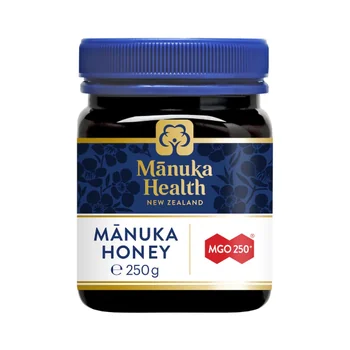
MGO 250+ (UMF 10+)
Best for daily use, sore throats, skin care and immunity
Best Offer Manuka 250+ MGO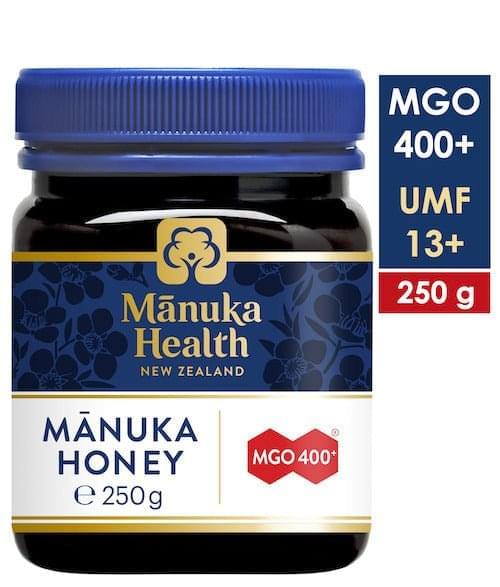
What does MGO mean on Manuka honey?
MGO stands for methylglyoxal, a naturally occurring compound found in the nectar of the Manuka flower (Leptospermum scoparium) in New Zealand. The number after MGO tells you the minimum concentration of methylglyoxal in milligrams per kilogram of honey.
MGO 250 means at least 250 mg/kg. MGO 400 means at least 400 mg/kg. The higher the number, the more methylglyoxal is present, and the stronger the antibacterial effect. This is measurable, lab-tested and standardised across certified products.
The UMF (Unique Manuka Factor) rating is an alternative grading system that measures the same antibacterial properties but uses a different scale. MGO 250 corresponds roughly to UMF 10+, MGO 400 to UMF 13+, and MGO 550 to UMF 15+. For a detailed breakdown, see our complete MGO and UMF guide.
MGO 250 vs 400 vs 550 - full comparison table
| Criterion | MGO 250+ | MGO 400+ | MGO 550+ |
|---|---|---|---|
| MGO concentration | 250+ mg/kg | 400+ mg/kg | 550+ mg/kg |
| UMF equivalent | UMF 10+ | UMF 13+ | UMF 15+ |
| Antibacterial strength | High | Very high | Superior |
| Price (250g jar) | ~125 lei | ~195 lei | ~249 lei |
| Daily wellness | Excellent | Good (overkill) | Not needed |
| Sore throat & colds | Recommended | Also effective | Not needed |
| Skin care & acne | Recommended | Also effective | Not needed |
| Digestive issues | Mild support | Recommended | Also effective |
| H. pylori & ulcers | Not sufficient | Recommended | Also effective |
| Wound healing | Minor cuts only | Recommended | Best choice |
| Bacterial infections | Not sufficient | Moderate | Recommended |
| Value for money | Best value | Good value | Premium |
When to choose MGO 250+
MGO 250 is the most versatile level and the one most people should start with. At a UMF 10+ equivalent, it has enough antibacterial activity to make a real difference for common health concerns without the premium price tag of higher levels.
Choose MGO 250 if you want to use Manuka honey for:
- Daily immunity support - 1 teaspoon in the morning on an empty stomach
- Sore throat relief - let it dissolve slowly in the back of your throat
- Cold and flu season - take 2-3 times daily at the first sign of symptoms
- Acne treatment - apply directly to spots or use as a face mask
- DIY face masks - mix with other natural ingredients for skin care
- General skin health - moisturising, reducing redness and improving texture
- Minor cuts and scrapes - apply a thin layer and cover with a bandage
At around 125 lei for a 250g jar, MGO 250 offers the best balance between effectiveness and price. It is certified, lab-tested and provides clinically relevant antibacterial activity for everyday use.
When to choose MGO 400+
MGO 400 is where Manuka honey starts to show its strength for more specific health conditions. The jump from 250 to 400 mg/kg of methylglyoxal gives it noticeably stronger antibacterial properties, which matters when dealing with stubborn bacteria or inflammatory conditions.
Choose MGO 400 if you need Manuka honey for:
- Acid reflux and digestive issues - take 1 teaspoon 20 minutes before meals
- H. pylori treatment support - alongside prescribed medication
- Gastritis and stomach lining inflammation
- Wound healing - burns, surgical wounds, slow-healing cuts
- Gingivitis and gum health - apply to gums or dissolve slowly in the mouth
- Eczema and psoriasis - apply to affected areas for 20-30 minutes
At around 195 lei for a 250g jar, MGO 400 costs about 56% more than MGO 250. The price difference is justified when you have a specific condition that benefits from the higher antibacterial concentration. For general wellness, it is more than you need.
When to choose MGO 550+
MGO 550 is the highest level most people will ever consider. At UMF 15+ equivalent, it has very strong antibacterial properties and is closest to what is used in clinical settings and medical research.
Choose MGO 550 only if you need it for:
- Chronic or infected wounds that are not responding to lower MGO levels
- Bacterial infections - as a complementary treatment alongside antibiotics
- Antibiotic-resistant bacteria (MRSA) - clinical studies have used high-MGO Manuka
- Severe digestive conditions - when MGO 400 has not provided enough relief
- Post-surgical wound care under medical supervision
At around 249 lei for a 250g jar, MGO 550 is a significant investment. Unless you have a specific medical reason, you are paying a premium for antibacterial strength you likely do not need. Most conditions respond well to MGO 250 or MGO 400.
Need the highest antibacterial potency for serious conditions?
View MGO 550+ PriceQuick decision guide
If you are still not sure which level to pick, use this simple rule:
- For prevention and daily health - go with MGO 250
- For a specific health condition (digestive, wounds, skin condition) - go with MGO 400
- For a serious or chronic medical issue - go with MGO 550
- If in doubt - start with MGO 250 and move up if needed
There is no benefit to using a higher MGO level than what your condition requires. You will not get faster results from MGO 550 for a sore throat compared to MGO 250. The antibacterial strength is matched to the types of bacteria and conditions that each level is effective against.
How to take Manuka honey - dosage for each level
The dosage is the same regardless of MGO level. What changes is when and how often you take it:
- Standard dose - 1 teaspoon (5-7g), 1 to 3 times daily
- For digestive issues - take 20-30 minutes before meals on an empty stomach
- For sore throat - let it dissolve slowly at the back of your throat, do not wash it down with water immediately
- For skin application - apply a thin layer directly to the affected area and leave for 20-30 minutes
- For wound care - apply to a sterile bandage, then place on the wound
Do not heat Manuka honey above 40°C. High temperatures break down the methylglyoxal and reduce its antibacterial effectiveness. Avoid adding it to boiling water or using it in cooking.
How to make sure your Manuka honey is authentic
Regardless of which MGO level you choose, always check for these markers:
- UMF certification logo on the label - this is the gold standard for authenticity
- Product of New Zealand - genuine Manuka honey can only come from New Zealand
- Batch number and traceability code - quality producers include this on every jar
- Licensed brand - check that the producer is a member of the UMFHA (UMF Honey Association)
The products we recommend are all from Manuka Health, a certified New Zealand producer with full traceability. For more details on reading labels and verifying authenticity, see our MGO and UMF guide on the homepage.
Frequently asked questions
What is the difference between MGO 250 and MGO 400?
MGO 250 contains at least 250 mg/kg of methylglyoxal and is suited for daily use, sore throats, colds and skin care. MGO 400 has a higher concentration (400+ mg/kg) with stronger antibacterial activity, making it better for digestive issues like acid reflux, H. pylori and wound healing.
Is MGO 550 worth the extra cost?
MGO 550 is worth it if you need maximum antibacterial strength for serious conditions like bacterial infections, chronic wounds or ulcers. For general health and prevention, MGO 250 or 400 offers better value for money.
Which MGO level is best for beginners?
MGO 250 is the best starting point. It provides meaningful antibacterial activity at a reasonable price, and it covers most common uses like immunity support, sore throats and basic skin care.
Can I use MGO 250 for stomach problems?
For mild digestive discomfort, MGO 250 may help. However, for conditions like gastritis, acid reflux or H. pylori, MGO 400 or higher is recommended because the higher methylglyoxal concentration provides stronger antibacterial action against gut bacteria.
How much Manuka honey should I take daily?
The standard dosage is 1 teaspoon (about 5-7g) taken 1 to 3 times per day, ideally 20-30 minutes before meals. This applies to all MGO levels. Do not exceed 3 teaspoons per day.
Does higher MGO mean better quality?
Higher MGO means higher methylglyoxal concentration and stronger antibacterial activity. It does not necessarily mean better quality - a well-certified MGO 250 from a reputable brand is higher quality than an uncertified MGO 550. Always look for the UMF certification mark.
Ready to choose your Manuka honey?
Pick the level that matches your needs. For most people, MGO 250 is the best starting point.
Related reading
- Best Manuka Honey for Sore Throat - Which MGO Level Works?
- Manuka Honey for Gut Health - Acid Reflux, H. Pylori and Digestion Guide
- Best Manuka Honey for Wound Healing - Which MGO Level?
- Manuka Honey for Acne - Complete Treatment Guide
- What MGO Manuka Honey Is Best for Skin?
- Complete Manuka Honey Guide - Homepage